Publications

This book is currently out of print, and there are no plans for a new edition or reprint at this time.
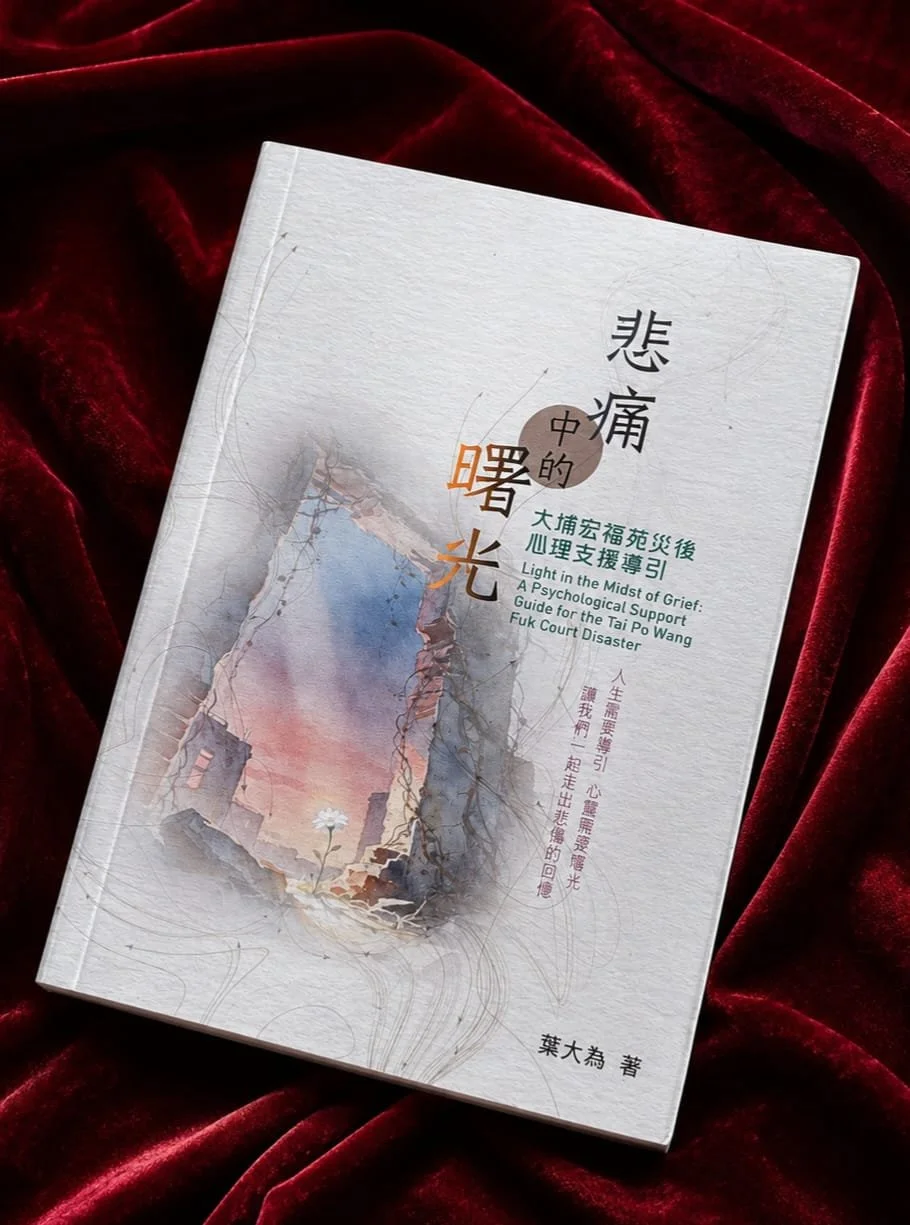
Light in the Midst of Grief is a compassionate and practical guide written in response to one of Hong Kong’s tragic community disasters — the Tai Po Hung Fuk Court fire. This book was written not only to address emotional trauma and grief, but also to bring hope, healing, and spiritual care to individuals and families facing deep pain and loss.
Drawing from years of pastoral ministry, counseling experience, and crisis intervention, Rev. Dr. David Yip combines psychological insight with Christian compassion to help readers understand the emotional impact of trauma. The book explores how grief affects the human mind, emotions, relationships, and spiritual life, while also offering practical guidance for emotional recovery and inner healing.
Unlike many academic discussions on trauma, Light in the Midst of Griefis written in a warm and accessible style for ordinary readers, church leaders, caregivers, and members of the wider community. It addresses real-life emotional struggles such as fear, shock, anxiety, survivor’s guilt, sadness, emotional numbness, and spiritual confusion that often arise after tragic events.
The book also emphasizes the important role of the church and faith communities during times of crisis. It encourages pastors, counselors, and believers to become instruments of comfort and healing to those who are suffering. Through prayer, compassionate listening, emotional support, and the presence of God, wounded individuals can gradually find strength and hope again.
A central theme throughout the book is that healing is not merely psychological, but also spiritual. True restoration comes when individuals encounter God’s love and presence even in the darkest moments of life. The title, Light in the Midst of Grief, reflects the conviction that even in tragedy and sorrow, there remains a light that cannot be extinguished — the hope, comfort, and healing found in Christ.
This publication is especially meaningful for Chinese churches, Christian counselors, pastors, and communities seeking to understand trauma care and emotional support from both professional and faith-based perspectives. It also serves as a valuable resource for disaster response ministry and emotional care training within the global Chinese Christian community.
Light in the Midst of Grief (2026)
A Psychological Support Guide for the Tai Po Wang Fuk Court Disaster
Book Introduction
This book is currently available exclusively in Hong Kong.
Overcome the Pain (2008)
Self-help Manual for Counseling the Earthquake Victims
Book Introduction
Overcome the Pain is a practical and compassionate psychological support manual written in response to the devastating Sichuan earthquake in China. Authored by Rev. Dr. David Yip, this book was developed not merely as an academic discussion on trauma, but as a hands-on guide designed to assist earthquake survivors, volunteers, counselors, pastors, social workers, and frontline relief workers who were serving in the midst of one of the most painful disasters in recent Chinese history.
The book combines psychological counseling principles, trauma recovery techniques, emotional support strategies, and spiritual care into an accessible self-help format. Written originally in Chinese, the manual was intended for ordinary people who may not have formal psychological training, yet desired to understand emotional trauma and offer compassionate support to others. The author emphasizes that emotional wounds after disasters are real, serious, and deserving of proper care and attention.
One of the major strengths of this book is its integration of theory and practical application. Rather than presenting psychology in complicated clinical language, the author explains emotional reactions to trauma in simple and understandable ways. Readers are guided through common post-disaster emotional responses such as fear, anxiety, grief, helplessness, survivor’s guilt, anger, emotional numbness, and post-traumatic stress symptoms. The book helps survivors understand that many of these reactions are normal responses to abnormal circumstances.
The manual also provides practical guidance on how to support victims emotionally and psychologically. It discusses how to communicate with survivors, how to listen effectively, what should or should not be said during crisis intervention, and how volunteers can care for themselves while helping others. Special attention is given to frontline workers and caregivers who may themselves experience secondary trauma or emotional exhaustion during rescue work.
Another important theme throughout the book is hope and restoration. While the author does not minimize the reality of suffering, he consistently points readers toward healing, resilience, community support, and emotional recovery. The book encourages readers not to suppress pain, but to face grief honestly while moving gradually toward emotional restoration and renewed meaning in life.
The structure of the book is highly practical. Each chapter includes summaries, reflection questions, self-assessment exercises, and discussion materials suitable for counseling groups, church support groups, training workshops, and educational purposes. Topics include understanding disasters and trauma, emotional reactions after crisis, PTSD, emotional healing, crisis intervention, counseling skills, family support, volunteer training, and long-term recovery.
Originally published in September 2008 by HKICC (Hong Kong Institute of Christian Counselors), Overcome the Pain became an important resource for Chinese-speaking communities seeking psychological and emotional support after disaster and crisis situations. Though written in the context of the Sichuan earthquake, its principles remain deeply relevant today for anyone ministering to wounded communities, grieving families, trauma survivors, or people facing emotional crises.
This book stands as both a counseling resource and a testimony of compassion, reminding readers that emotional healing is possible even after great suffering.